
Journal
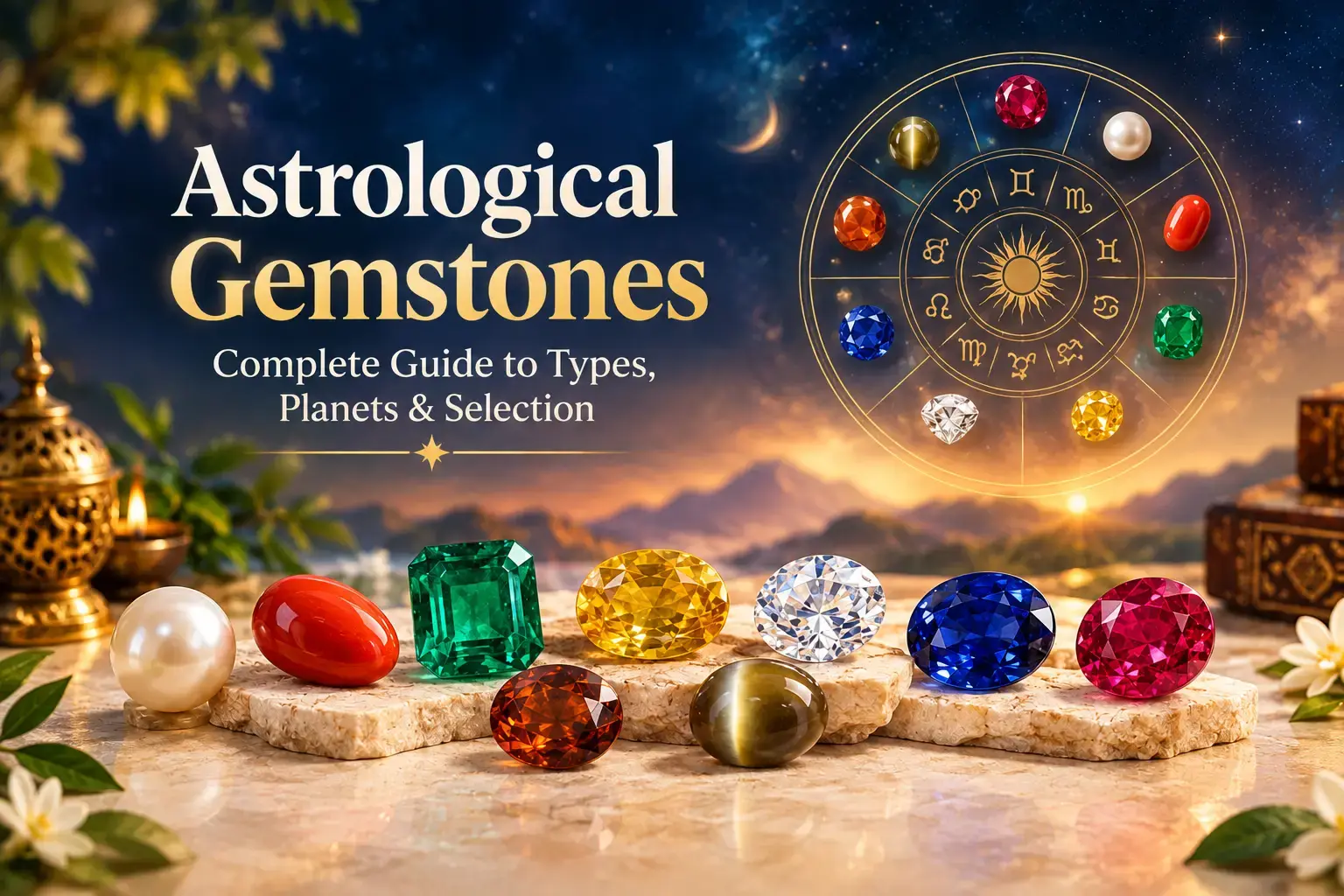
Astrological Gemstones: Complete Guide to Types, Planets & Selection
Gemstones have been associated with astrology and traditional spiritual practices for centuries. In Vedic astrology, specific gemstones are traditionally linked with planets and are often selected based on an individual's birth chart.
From Ruby and Blue Sapphire to Emerald, Yellow Sapphire and Red Coral, each gemstone has a different traditional planetary association.
But with so many gemstones available, choosing the right one can be confusing.
Which gemstone is associated with your planet? How do you choose an astrological gemstone? What is the difference between natural and synthetic gemstones? And why does gemstone certification matter?
This complete guide to astrological gemstones covers these questions and more.
What Are Astrological Gemstones?
Astrological gemstones are gemstones traditionally associated with specific planets in Vedic astrology.
The traditional concept is that gemstones are selected according to planetary associations in an individual's birth chart. Different gemstones are therefore connected with different planets.
The commonly referenced nine planetary gemstones are collectively known as Navratna gemstones.
Navratna Gemstones in Vedic Astrology
The term Navratna literally refers to nine gemstones. Each gemstone is traditionally connected with one of the nine planetary influences used in Vedic astrology.
1. Ruby — Sun
Ruby is traditionally associated with the Sun.
It is known for its rich red colour and is considered one of the prominent gemstones in traditional Vedic astrology.
Ruby is available in different shades and qualities, so factors such as colour, clarity, cut and origin can be relevant when evaluating a stone.
2. Pearl — Moon
Pearl is traditionally associated with the Moon.
Unlike most gemstones, natural pearls are organic gemstones formed inside certain molluscs.
Pearls are commonly valued based on factors such as lustre, surface quality, shape, colour and size.
3. Red Coral — Mars
Red Coral is traditionally associated with Mars.
It is an organic gemstone obtained from marine coral and is generally recognised for its red to reddish-orange appearance.
4. Emerald — Mercury
Emerald is traditionally associated with Mercury.
It belongs to the beryl mineral family and is particularly known for its green colour.
5. Yellow Sapphire — Jupiter
Yellow Sapphire is traditionally associated with Jupiter.
Its colour can range from pale yellow to stronger golden shades.
6. Diamond — Venus
Diamond is traditionally associated with Venus.
Diamonds are valued using several characteristics, including the familiar 4Cs:
Cut
Colour
Clarity
Carat weight
7. Blue Sapphire — Saturn
Blue Sapphire is traditionally associated with Saturn.
It is generally recognised for its blue colour and can occur in a range of blue shades.
8. Hessonite — Rahu
Hessonite Garnet is traditionally associated with Rahu.
It is generally recognised by its honey, orange-brown or cinnamon-like appearance.
9. Cat's Eye — Ketu
Cat's Eye, commonly referring to chrysoberyl cat's eye in the traditional gemstone context, is associated with Ketu.
Its most distinctive feature is the visible chatoyancy effect—a bright band of light that appears to move across the surface of the stone when viewed under suitable lighting.
Natural vs Synthetic Gemstones: What's the Difference?
One of the most important things to understand when buying gemstones is the difference between natural and synthetic gemstones.
Natural Gemstones
Natural gemstones are formed through natural geological or biological processes.
They may have inclusions and other characteristics resulting from their formation.
Synthetic Gemstones
Synthetic gemstones are created by humans but may have essentially the same chemical composition and crystal structure as their natural counterparts, depending on the material.
Imitation Gemstone
Imitation materials are designed to resemble gemstones but do not have the same composition as the gemstone they imitate.
Therefore, buyers should always check exactly what material they are purchasing.
How to Care for Your Gemstones
Proper care can help maintain the appearance of your gemstone.
General care tips include:
Keep gemstones away from harsh chemicals.
Avoid unnecessary exposure to extreme heat.
Store individual gemstones separately to reduce scratching.
Clean jewellery according to the gemstone's specific properties.
Avoid using household cleaning chemicals without knowing whether they are suitable for the stone.
Keep certificates and purchase information safely stored.
Not every gemstone has the same hardness or durability, so care instructions should be specific to the gemstone.
What Should You Check Before Buying an Astrological Gemstone?
Before purchasing a gemstone online or offline, check:
Gemstone Checklist
✔ Correct gemstone name
✔ Natural / synthetic / imitation status
✔ Treatment disclosure
✔ Weight
✔ Dimensions
✔ Colour and clarity information
✔ Certification, where applicable
✔ Seller information
✔ Return/exchange policy
✔ Product photographs
✔ Price and invoice details
For expensive gemstones, asking questions before purchasing can help avoid misunderstandings.
Explore Natural Gemstones with Vyomastro
At Vyomastro, we aim to make gemstone selection easier by providing clear product information for customers exploring gemstones for astrology, jewellery and personal collections.
Explore gemstones by type, including:
Astrological Gemstones | Navratna | Precious Gemstones | Semi-Precious Gemstones | Loose Gemstones | Cabochons
You can also explore our collection of Rudraksha, spiritual products, healing crystals and other traditional products.
Explore the Vyomastro gemstone collection and learn more about each gemstone before making your purchase.
Frequently Asked Questions
What are astrological gemstones?
Astrological gemstones are gemstones traditionally associated with planets in Vedic astrology. They are often selected according to traditional interpretations of an individual's birth chart.
Which gemstones are part of Navratna?
The traditional Navratna group consists of Ruby, Pearl, Red Coral, Emerald, Yellow Sapphire, Diamond, Blue Sapphire, Hessonite and Cat's Eye.
How do I choose an astrological gemstone?
Traditional gemstone selection may involve analysing a person's birth chart and planetary associations. The gemstone's quality, authenticity, treatment status and certification should also be considered when purchasing.
Are natural gemstones better than synthetic gemstones?
Natural and synthetic gemstones are different categories and should be clearly disclosed. Whether one is preferable depends on the buyer's purpose, budget and expectations.
Why should I buy a certified gemstone?
A laboratory report can provide additional information about gemstone identity and characteristics. For valuable gemstones, certification can add transparency to the purchase.
What is the difference between carat and ratti?
Both are used as gemstone weight measurements, but they are different units. Ratti is a traditional unit commonly used in the Indian gemstone market, while carat is a standard gemstone weight unit.
Can gemstones guarantee financial or personal results?
There is no scientific basis for guaranteeing specific financial, relationship, career or other life outcomes from wearing a gemstone. Astrological gemstone associations should be understood as part of traditional belief systems.