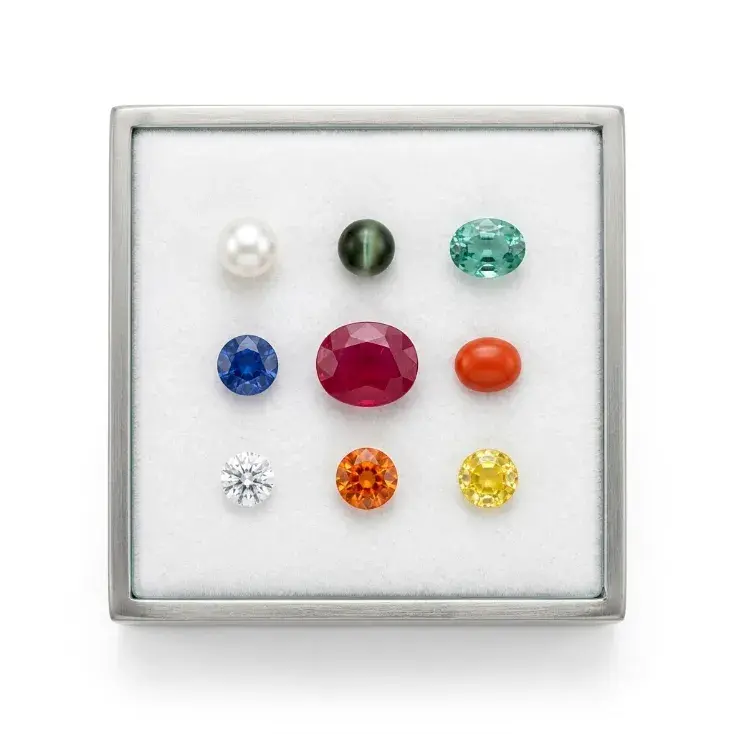
Navratna
Natural Hessonite Garnet (Gomed) Gemstone — Astrological Stone for Rahu, Honey brown, Faceted, Cabochon
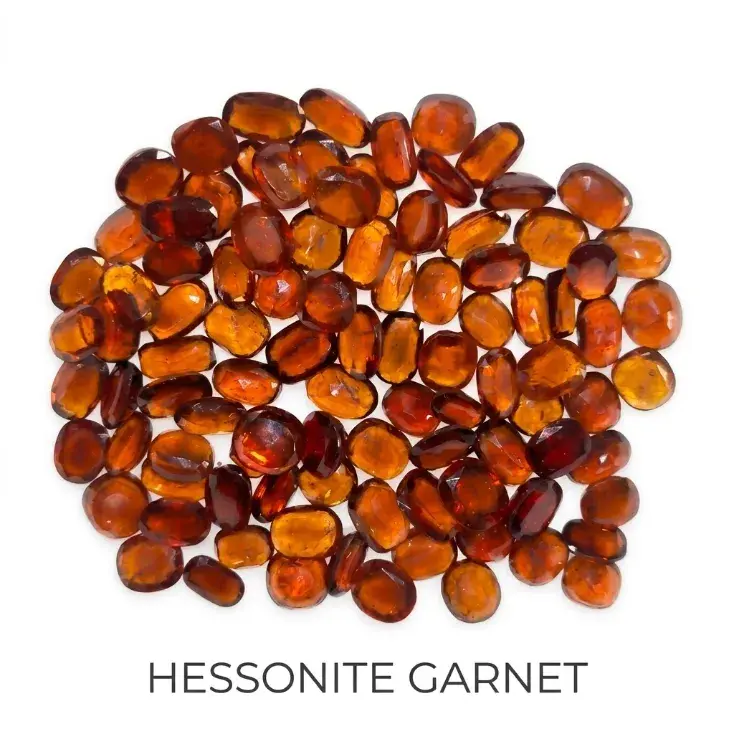
Natural Hessonite Garnet, known as Gomed in Vedic astrology, is the designated gemstone for planet Rahu. With its warm honey to cinnamon-brown tone and smooth cabochon finish, Gomed is worn to reduce Rahu's negative effects, ease confusion and anxiety, and bring clarity, focus and material success. Available loose in multiple sizes, untreated and natural.
SKU: ZYVY10022001 | Stock: 5
Color
Cut
Shape
Description
Hessonite Garnet (Gomed): The Gemstone of Rahu
Hessonite Garnet, popularly called Gomed in Hindi, is one of the nine Navratna gemstones and holds a special place in Vedic astrology as the only recognised gemstone for the shadow planet Rahu. Its name comes from the Greek word for "honey," reflecting its characteristic warm brownish-orange to cinnamon-red colour, often with a soft, oily or honey-like lustre when cut as a cabochon.
Astrological Significance
Rahu is considered a shadow planet in Vedic astrology, associated with ambition, illusion, foreign connections, and sudden events. When Rahu is weak, afflicted, or poorly placed in a horoscope, individuals may experience confusion, anxiety, unexplained fears, or obstacles in career and decision-making. Gomed is traditionally recommended to:
- Pacify malefic or afflicted Rahu in the birth chart
- Reduce confusion, negative thinking and irrational fear
- Support success in foreign travel, politics, and unconventional careers
- Improve focus, decision-making and mental clarity
- Act as protection against black magic and negative energies (as per traditional belief)
It is commonly advised during Rahu Mahadasha or Antardasha, or when Rahu is positioned unfavourably in one's chart — always after consulting a qualified astrologer.
Physical & Gemological Properties
Hessonite Garnet is a calcium-aluminium garnet (grossular garnet group), distinct from other garnet varieties due to its characteristic treacle-like or honey internal texture, caused by natural inclusions. It typically has a smooth, glassy to oily lustre and is most often cut as a cabochon (smooth-domed, unfaceted) rather than faceted, as shown in this lot — though faceted versions are also available.
You May Also Like
Related pieces